Swiss Pass benefit calculator: How to guide travel savings
"The Swiss Travel Pass is not a one-size-fits-all solution; its value depends entirely on how many mountain excursions and long-distance train rides you pack into your itinerary."
To use a Swiss Pass benefit calculator effectively, you must compare the fixed cost of the pass against the individual price of every train, bus, and boat ticket you intend to buy. This guide helps travelers determine if a pass is cost-effective by analyzing travel frequency and class preferences.
You should focus on your specific route density, account for potential upgrades, and recognize that the pass may not cover every single mountain excursion or specialty gondola.
* Calculate total individual ticket costs for your planned route. * Compare the pass price against your specific itinerary. * Consider the comfort difference between First and Second Class. * Factor in mountain excursion discounts.
How can I use a Swiss Pass benefit calculator?
A traveler sits at a wooden cafe table in Zurich, tapping a calculator while staring at a printed list of train fares. They must sum every single ticket price for their planned journey through the Alps to see if the total exceeds the price of a Swiss Travel Pass.
Using a Swiss Pass benefit calculator requires a meticulous breakdown of your intended movements. You should list every segment, from local buses in Bern to long-distance trains toward Zermatt.
If your total individual ticket costs are lower than the pass price, buying point-to-point tickets is the better financial choice.
To optimize your Swiss trip budget, you must also include the cost of boat rides on lakes like Lake Sils or Oeschinen. Many travelers forget that while the pass offers great flexibility, it does not make every single mountain lift free.
You must weigh the convenience of unlimited travel against the rigid cost of a pre-paid pass.
- Input your planned destinations and travel dates.
- Enter the number of trips you intend to take.
- Compare the total cost of individual tickets against the pass price.
Which Swiss pass will save me the most money?
An explorer stands on a platform in Interlaken, holding a digital ticket and looking at the mountain peaks. They are trying to decide if the flexibility of the pass outweighs the savings of buying specific regional passes for a shorter stay.
According to World Bank data, Switzerland recorded international tourist arrivals of 11,818,000 in 2019.
The most cost-effective option depends on your travel duration and the frequency of your trips. For travelers moving between cities daily, a continuous pass often provides the best value. However, if you are staying in one region for several days, a regional pass might serve you better.
Compare Swiss rail costs by looking at your planned excursions. Some travelers find that the pass pays for itself quickly through unlimited use of boats and local transport. Others find that point-to-point tickets are cheaper if they only travel a few times a week.
I find that the second step in this comparison is the most time-consuming.
How to calculate Swiss pass savings?
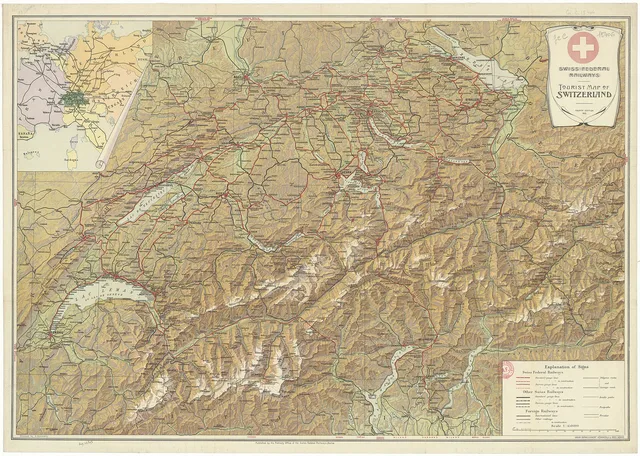
A person sits in a quiet library, marking a map of the Swiss Alps with a red pen. They are tracing a line from Geneva to St. Moritz, noting every stop along the way.
To find your savings, follow these three steps:
- List every intended trip, including local buses, trams, and trains. 2. Research the individual price for each of those segments. 3. Subtract the total individual cost from the price of the Swiss Travel Pass.
After completing these steps, perform a final check by adding in any mountain excursion discounts. I once realized that my planned route was too sparse to justify a continuous pass, saving me significant money by opting for single tickets instead.
Is First Class actually worth the extra money?
A passenger settles into a plush, wide seat in a First Class carriage, watching the scenery glide by through a large window. They look at the quiet, spacious cabin and compare it to the crowded Second Class cars they saw earlier.
The decision to upgrade is a matter of both budget and comfort. One traveler reported a 50,000 Yen difference when choosing between First and Second Class for an 8-day trip. This significant gap means you must decide if the extra space and quiet are worth the premium.
| Travel Class | Experience Factor | Cost Impact |
|---|---|---|
| Second Class | Standard efficiency | Lower initial price |
| First Class | Increased space/quiet | Higher total investment |
I compared these two options during my own planning to see if the luxury justified the price jump. If you travel frequently on long stretches, the comfort might be worth the extra expense.
What are the limitations of the pass?

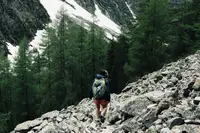
A hiker pauses on a trail, looking up at a steep mountain ridge that requires a cable car. They check their pass, only to realize the specific gondola requires an additional fee.
The pass is not a universal free pass for every single mountain ascent. While it provides great coverage, some specific mountain excursions or high-altitude lifts may require a supplemental payment or only offer a discount.
The effectiveness of the pass is limited by your specific itinerary. If you spend most of your time walking or staying in one small village, the pass may not be the most economical choice.
Related
When should I consider a Swiss Travel Pass over regional options?
A traveler reviews several brochures detailing various Swiss regional passes near a major rail hub. They are weighing the broad coverage of the main Swiss Travel Pass against the focused benefits of a smaller, area-specific ticket.
The choice between the comprehensive Swiss Travel Pass and a targeted regional pass hinges on the geographic spread of your Swiss itinerary. If your movements span multiple distinct valleys or cities far apart, the continuous Swiss Travel Pass generally proves more advantageous.
Conversely, if your entire Swiss stay is concentrated within a specific valley or tourist zone, a regional pass might offer superior value by covering all necessary local transport within that smaller area.
This comparison requires careful mapping of your intended Swiss destinations. You must assess whether the cost of the regional pass, when added to the cost of any necessary long-distance journeys outside that region, surpasses the price of the full Swiss Travel Pass.
Always review the coverage maps to ensure the regional pass includes all desired local transport modes.
What conditions affect the pass's utility?
The pass's utility is significantly influenced by the type of activities you engage in during your Swiss journey. If your primary focus involves extensive hiking or staying stationary in a few locations, the unlimited travel aspect of the Swiss Travel Pass diminishes in importance.
The pass's value becomes most apparent when you utilize the extensive network of local transport, such as trams and buses, repeatedly over a short period. Frequent use of these included modes helps offset the initial investment in the Swiss Travel Pass.
A caution exists regarding the pass's scope; it does not guarantee access to every specialized Swiss attraction. You must check the specific terms for any high-demand mountain lifts or unique gondola rides to see if a supplement is required, as mentioned previously.
This necessity for supplemental payment changes the calculation of overall savings.




Comments 0