Glacier train vs mountain train: 65,000 km How to travel
"The journey through the Alps is not merely about reaching a destination, but about how the iron rails carve through the granite and ice."
Choosing between the Glacier Express and various mountain trains depends on whether you prioritize long-distance panoramic cruising or steep, localized climbs to high-altitude summits. This guide helps travelers decide based on route length, scenic focus, and regional accessibility.
You should consider the Glacier Express for a slow-paced cross-country experience and mountain trains for direct access to specific peaks. Note that specific rail schedules and peak season availability are not established in this comparison.
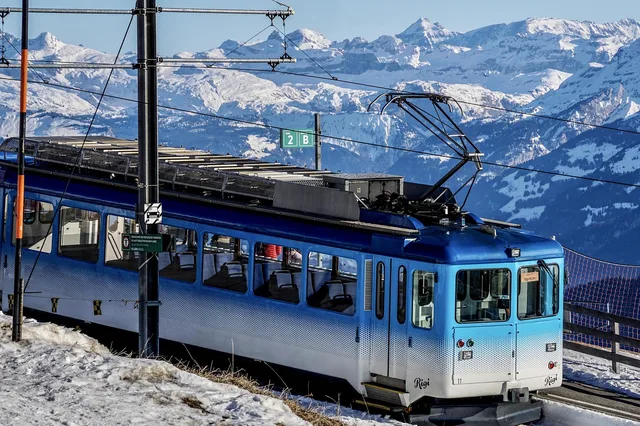
* Glacier Express: Long-distance panoramic views across major passes. * Mountain Trains: Short, steep climbs to specific summits or viewpoints. * Regional Focus: Grisons and Valais as major tourism hubs. * Traveler Profile: International visitors and hiking enthusiasts.
What makes the Glacier Express so special?
At noon, you lean against the panoramic window to feel the vibration of the Glacier Express as it glides through the deep valley.
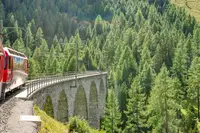
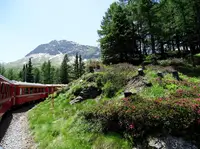
A passenger sits in a large, glass-walled carriage, watching the Rhine Gorge slide past the window as the train winds through deep valleys. The Glacier Express focuses on a slow, grand traverse of the Swiss Alps, connecting major hubs over several hours.
This long-distance service is designed for those who want to see the landscape change gradually through expansive panoramic windows.
The primary distinction is the duration and the continuous nature of the route. While mountain trains serve as functional links to specific peaks, the Glacier Express functions as a mobile observation deck.
It connects different regions, allowing travelers to witness the transition from lush valleys to high-altitude passes in a single, uninterrupted journey.
How do mountain trains differ in purpose? Glacier train vs mountain train
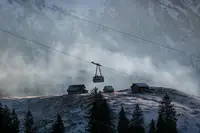
You stand on the platform and shiver in the cold wind while watching a local train climb past the distant glacier.
A hiker stands at a station platform, clutching a walking stick while waiting for a small, brightly colored train to ascend a steep incline. Mountain trains are typically shorter, specialized lines designed to transport passengers from valley floors to specific high-altitude destinations.
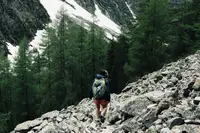
These lines often serve as the gateway to the extensive Swiss hiking network.
According to Wikipedia, the total hiking trail network in the country is about 65,000 km (40,000 mi). Mountain trains are essential for accessing these paths quickly. Unlike the cross-country Glacier Express, these local lines focus on verticality and immediate access to summits.
They provide the necessary lift for those intending to explore the rugged terrain on foot.
According to World Bank, the 2025 record includes 97.3%.
Which regions are best for rail tourism?
A traveler checks a map in a hotel lobby, noting the density of accommodations in the southeastern mountains. Certain cantons serve as the primary anchors for rail-based sightseeing due to their dramatic topography and hotel density.
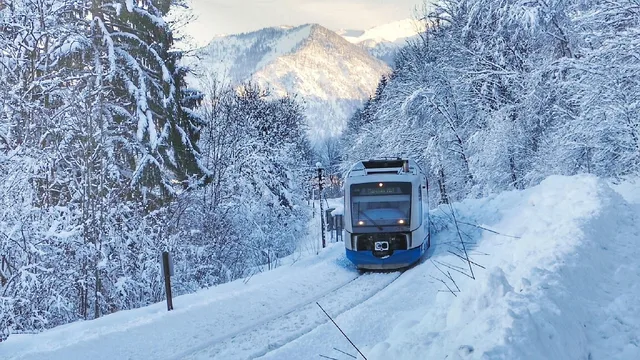
Travelers often choose their starting point based on these major tourism clusters.
| Region | Hotel Distribution |
|---|---|
| Grisons | 14% |
| Valais | 12% |
| Eastern Switzerland | 12% |
I compare these regional distributions to decide where to base my rail excursions. Grisons holds the highest concentration of hotels at 14%, making it a central hub for rail enthusiasts. The Valais and Eastern Switzerland follow closely, each hosting 12% of the country's hotel capacity.
How can I plan a rail-based itinerary?
A traveler sits at a wooden table in a mountain lodge, sketching a route that connects various rail lines. To maximize the experience of the Glacier Express vs mountain train choice guide, follow these steps to ensure a smooth trip.
- Select a primary long-distance route like the Glacier Express for cross-country scenery. 2. Identify specific mountain peaks or hiking destinations you wish to visit via local lines. 3. Book accommodations in high-density regions like Grisons or Valais to minimize transit time.
Perform a final check of your connections to ensure the timing of long-distance arrivals aligns with local mountain train departures.
- Research the specific routes and scenic highlights of each region.
- Purchase a regional rail pass to simplify ticketing and transfers.
- Book seat reservations in advance for popular panoramic trains.
- In this order, the second step is the most important.
What is the impact of international tourism on rail travel?
A group of travelers from different nations gathers at a bustling station, looking at digital departure boards. The high volume of international visitors drives the demand for both luxury panoramic trains and efficient mountain transport.
According to World Bank data, Switzerland recorded share of internet users of 97.3% in 2025.
This influx of travelers shapes the service levels and infrastructure of the Swiss rail network.
The scale of international interest is significant. According to Wikipedia, 56.4% of lodging nights were by visitors from abroad. This international presence includes travelers from Germany (16.5%), the United Kingdom (6.3%), and the United States (4.8%).
Such demand supports the complex web of Alpine rail travel.
Is it difficult to navigate these options?
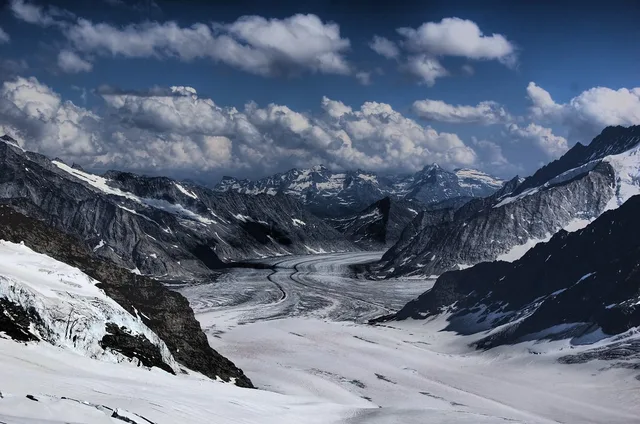
A commuter glances at a smartphone, checking real-time updates while standing on a platform in the crisp morning air. Navigating the choice between high-altitude rail travel and long-distance scenic routes is manageable with proper regional knowledge.
The density of the network allows for flexible combinations of different train types.
The Alpine rail comparison reveals that while the Glacier Express offers a singular, curated experience, the mountain trains offer modularity. You can use local lines as feeders to reach the larger networks.
This connectivity is a hallmark of the Swiss transport system, allowing for seamless transitions between different modes of mountain travel.
Related
- Swiss Pass cost guide: How to find best Swiss travel pass
- Swiss Pass benefit calculator: How to guide travel savings
When should the journey through the Alps prioritize views over access?
- The Glacier Express should be chosen when the primary goal of the journey through the Alps is to witness the landscape unfold gradually across major passes. 2. Mountain trains become the preferred option when the objective involves reaching a specific, high-altitude point for immediate exploration.
This comparison highlights a fundamental divergence in service design; the former emphasizes duration and vista, while the latter emphasizes vertical reach and localized utility. Travelers must weigh the value of a continuous panoramic sweep against the necessity of reaching a particular summit.
For instance, if the traveler intends to spend time on the extensive hiking trail network, the mountain train offers a more direct means of arrival than the long-distance cruise.
Conversely, if the traveler desires a single, uninterrupted experience of the Alpine transition, the Glacier Express provides that singular focus.
Comments 0