Alps glacier hike alps guide: Easy glacier hike alps tips
Exploring the vastness of the Alps requires a clear understanding of the terrain and the commitment required for different routes. This guide is for travelers seeking to understand the scale of the Alps, comparing difficulty levels and estimated time requirements to ensure a safe journey. Key takeaways include understanding the massive geographic reach of the range, distinguishing between standard routes and technical climbs like the Heckmair Route, and recognizing that certain terrain features, such as overhanging rock, significantly increase difficulty. This overview is designed for those planning an Alpine trek, though it is limited by the fact that specific duration estimates for every individual trail are not provided.
What defines the geography of the Alps?
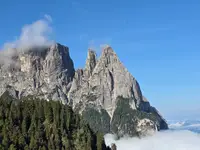
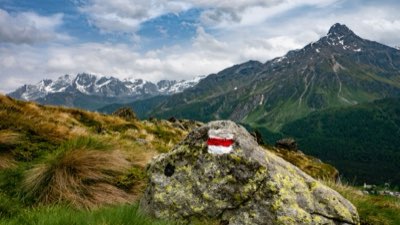
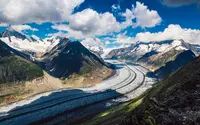
The traveler stands at a high vantage point, looking across a massive, curved mountain range that seems to stretch toward the horizon. This crescent-shaped geographic feature of central Europe ranges in an 800 km (500 mi) arc from east to west and is 200 km (120 mi) in width.
The Alps are some of the highest and most extensive mountain ranges in Europe, stretching approximately 1,200 km (750 mi) across several Alpine countries. According to Wikipedia, this range includes Monaco, France, Switzerland, Italy, Liechtenstein, Germany, Austria, and Slovenia.
The scale of the terrain is immense, as the mean height of the mountain peaks is 2.5 km (1.6 mi).
Because of this vastness, different countries host varying portions of the range. Austria holds 28.7% of the range's area, while Italy contains 27.2%. France accounts for 21.4% of the area, and Switzerland encompasses 13.2%.
Germany covers 5.8%, Slovenia holds 3.6%, Liechtenstein contains 0.08%, and Monaco accounts for 0.001%.
How do I choose an easy glacier hike in the Alps? Easy glacier hike alps
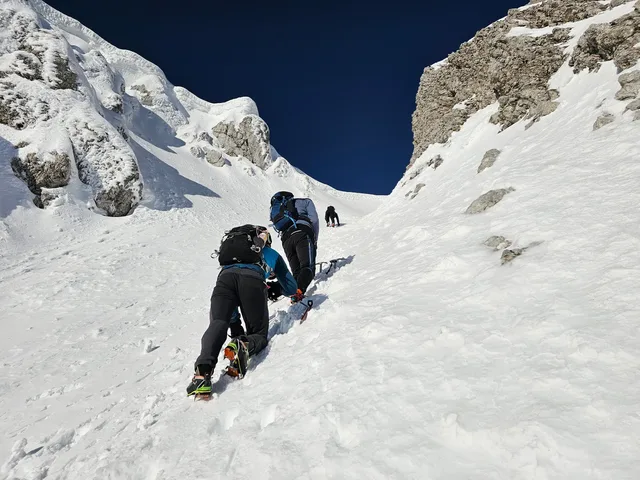
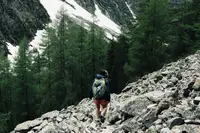
During the morning, I adjust my heavy pack while walking on a flat path through the Alps, feeling the crunch of snow beneath my boots.
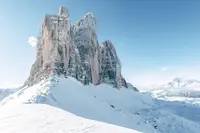
A hiker adjusts their boots on a flat, snowy path, feeling the crisp air while watching a distant peak glisten. Choosing an easy glacier hike in the Alps often means selecting paths that avoid steep inclines or technical rock faces.
When selecting an Alps glacier course difficulty, one must look at the specific terrain. Many travelers seek a short glacier walking tour to experience the high-altitude scenery without the intense physical demand of technical climbing.
For those looking for the best easy alpine trek, the focus is usually on well-marked paths that maintain a steady elevation rather than sudden climbs.
The Alps travel course selection guide often prioritizes routes that utilize existing infrastructure.
For instance, the region is highly connected by historical and modern transit routes, such as the Saint Gotthard Railway Tunnel, which was opened in 1882 to connect Lucerne in Switzerland with Milan in Italy.
What is the difference between trekking and technical climbing?
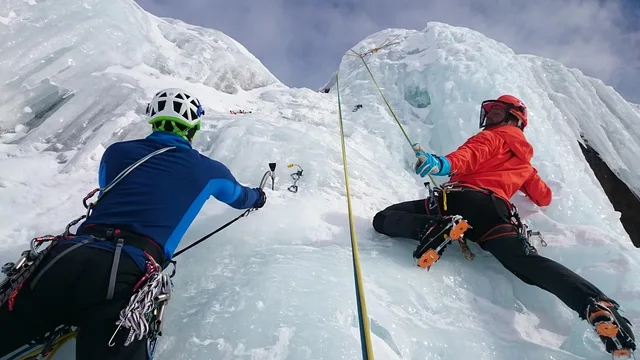
The climber grips a cold stone edge, looking up at a wall that seems to tilt backward into the sky. This distinction is vital when comparing the intensity of an Alpine trek duration against a technical ascent.
Technical climbing often involves much higher physical demands than a standard trek. For example, overhang or roof climbing involves a rock face that leans back at an angle of over 90 degrees for part or all of the climb.
At its most severe, this can become a horizontal roof, which is a characteristic found in many of the hardest modern climbs.
I once observed the difference between a casual walker and a technical climber on a steep ridge; the former moved with a steady rhythm while the latter used specialized gear to manage the incline.
One of the most famous alpine climbing routes is the 1938 Heckmair Route (ED2 V− A0 60 degrees), which is located on the north face of the Eiger.
How can I plan my Alpine travel?
A traveler unfolds a map near a mountain trailhead, checking the distance between two high-altitude villages. Planning an Alps travel course selection guide requires looking at how the terrain and water sources impact the landscape.
| Feature | Measurement |
|---|---|
| Arc Length | 800 km (500 mi) |
| Peak Mean Height | 2.5 km (1.6 mi) |
The mountains are not just a barrier but a vital resource for the surrounding regions. Although the area is only about 11% of the surface area of Europe, the Alps provide up to 90% of water to lowland Europe, particularly to arid areas and during the summer months.
For example, cities such as Milan depend on 80% of water from Alpine runoff.
Which countries should I visit for the best experience?
The train glides through a long, dark tunnel, emerging into a bright valley filled with green slopes and snow-capped summits. Choosing a country depends on the specific landscape you wish to encounter.
According to World Bank data, Switzerland recorded international tourist arrivals of 11,818,000 in 2019.
The distribution of the Alps varies significantly by nation. Austria and Italy host the largest portions of the range, with 28.7% and 27.2% of the area, respectively.
If you are looking for a specific experience, consider the connectivity of the region. The Gotthard Base Tunnel, opened on 1 June 2016, connects Erstfeld in the canton of Uri with Bodio in the canton of Ticino.
This infrastructure makes navigating the high terrain much more accessible for modern tourists.
- What defines the geography of the Alps?
- How do I choose an easy glacier hike in the Alps?
- What is the difference between trekking and technical climbing?
The subject here is Easy glacier hike alps.
The same subject is also called Glacier hike time beginner.
This part also covers Beginner hiking glacier tips.
Alps travel course selection guide
Related
Comments 0